Table Of Content
In the past, repairing damage to asphalt roads typically entailed overlaying the existing pavement with more asphalt. Over time, the asphalt layers build up the roadway crown and can create steep slopes on either side of the centerline. These slopes can be difficult for crossing pedestrians to negotiate (Figure 4-50) and create rapidly changing grades at curb ramps. The needs of pedestrians should be a high priority at grade-separated crossings.If designed correctly, grade-separated crossings can reduce pedestrian-vehicle conflicts and potential accidents by allowing pedestrians to avoid crossing the path of traffic. Near-side and Far-side Bus Stops at Intersections At intersections, bus stops can be located either on the near-side or the far-side of the intersection, depending on many factors. Far-side bus stops have the safety benefit of encouraging pedestrians to cross the roadway at the intersection behind the bus.
About The Guide
If a traffic signal is installed,an audible indicator that provides timing information should also be included.Audible or vibrotactile information is effective in alerting people with visual impairments of a midblock crossing. Medians and islands reduce the crossing distance from the curb and allow pedestrians to cross during smaller gaps in traffic. Examples of cut-through medians and ramped and cut-through islands are shown in Figure 4-39 and 4-40. Medians and islands are useful to pedestrians who are unable to judge distances accurately. Medians and islands also help people with slow walking speeds cross long intersections with short signal cycles. Because medians and islands separate traffic into channels going in specific directions, they require crossing pedestrians to watch for traffic coming in only one direction.
Enhancing Pedestrian Safety & Accessibility
These actions include engineering (physical infrastructure), education, and enforcement efforts. The most successful strategies often involve a combination of these treatments. Where space is limited between the curb and the sidewalk consider planting street trees on private property adjacent to a sidewalk.
Concrete Contractors
Sight distance can be limited by hills, curves, buildings, parked cars, landscaping, trees, and other objects. At roadside transit stops, poorly-placed shelters or non-transparent shelters can limit the ability of drivers to see pedestrians at or near the stop. In addition, transit vehicles servicing passengers at stops can block the sight lines between pedestrians crossing the roadway and other approaching drivers. Crossings placed near bus stops in low-density and rural areas may be of particular concern because minimum geometric standards may not be consistently met or maintained and pedestrians arrive less frequently, meaning motorists may be less likely to expect them.
Street Trees
When walking, the head is generally inclined 10 degrees down and sees 50 degrees above and 70 degrees below eye level. This places great importance on the design of the ground floor of buildings adjacent to the sidewalk. These considerations are extremely important for streets with high traffic volumes, where pedestrians may avoid the area because they feel unsafe. At-grade crossings with multiple tracks can present additional dangers to pedestrians who may assume that a warning has been deployed for a train that is currently stopped on one of the tracks when in reality, a second train is also coming on another track. Separate warnings may be necessary for these locations to help alert pedestrians of the full extent of the danger of the at-grade rail crossing. If the pavement of a sidewalk is a key element for the flow organization, the urban furniture chosen to compose the public space is responsible for the qualification of the place, creating more friendly spaces.
News Flash • Danville Launches Sidewalk Stroll: A Rainworks - Danville.Ca.gov
News Flash • Danville Launches Sidewalk Stroll: A Rainworks.
Posted: Mon, 29 Jan 2024 08:00:00 GMT [source]
DECORATIVE OPTIONS FOR NEW WALKWAYS

Well-designed grade-separated crossings minimize slopes,feel open and safe,and are well lit. Minimizing the slope of a grade-separated crossing is often difficult because a significant rise,generally from 4.3 to 5.5 m (14 to 18 ft),must be accommodated. In some situations, elevators can be installed to accommodate people with mobility impairments. Removal of roadside impediments (trees, street furniture, etc.) has an ambiguous safety record in urban environments and is at odds with city policies striving to increase pedestrian traffic and spur economic activity. Street trees and other roadside features are superior to wide shoulders or run-off zones, as they can decrease overall speeds and encourage a more pedestrian-friendly environment. Integrating walkway landscaping with your garden design creates a harmonious and unified outdoor space.
For example, reducing a road from four lanes to two lanes will impact the vehicle carrying capacity of the roadway. Engineering analyses should be conducted to evaluate the impact of removing travel lanes on all modes, including transit, automobiles, bicycles, and pedestrians and on parallel streets. There are a variety of actions that can be implemented by transit agencies and their partner organizations to improve safety for pedestrians traveling to transit.
The Government Is Paying People to Upgrade Their Home Comfort, Here’s Why
Avoid combining several walkway materials or adding unnecessary embellishments to your pathway. While a straight pathway might be the best walkway idea for your home, a curved walkway is infinitely more interesting. In some ways, curved walkway ideas may be easier to execute because of their organic edges. However, to successfully lay a curved concrete or brick walkway, you must possess expert DIY skills.
Designing Cities 2024: Miami-Dade
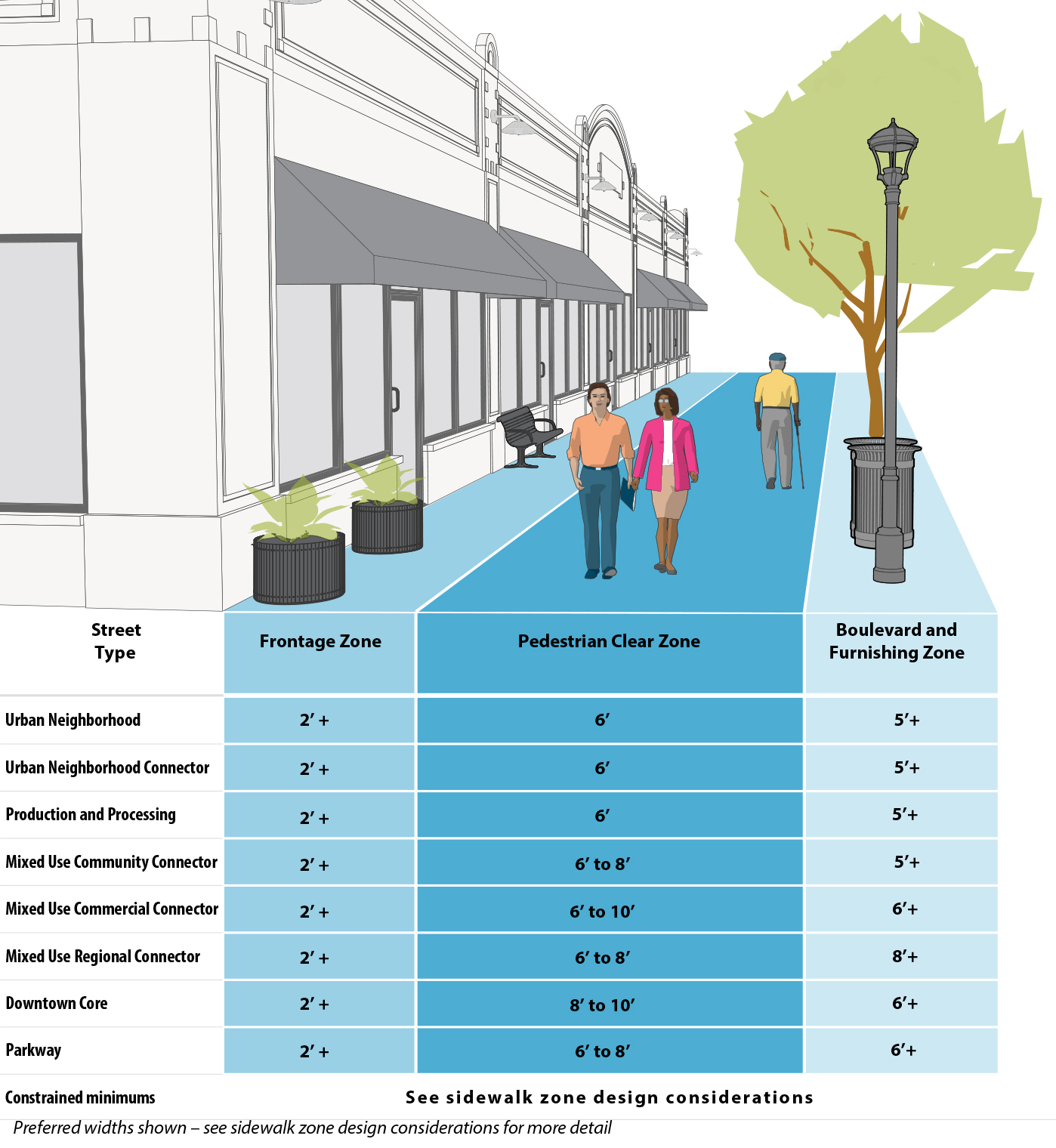
Sidewalks should be wide enough to accommodate the expected levels of pedestrian traffic. Narrow sidewalks that cannot accommodate the volume of foot traffic may encourage pedestrians to walk in the roadway or take alternate routes, increasing the potential for conflict with motor vehicles. Street furniture (e.g. pay phones, trash cans, newspaper racks, etc.), utilities, and street trees present obstacles to pedestrians, and reduce the sidewalk clear width. Obstacles should be placed outside of the normal pedestrian travel path ideally in the buffer zone (i.e., between the street and the sidewalk) to ensure direct pedestrian paths are provided. Sidewalks, walkways, and paths have evolved from simple dirt trails to complex urban designs. Initially, paths were merely trodden tracks formed by people walking the same route repeatedly.
Crosscut logs into rounds a few inches thick, coat with polyurethane, and lay them on level ground to which you’ve added a bed of sand or pebbles. Flag Stops In rural areas with low volumes of transit riders, flag stops are often implemented instead of standard bus stops. This system allows passengers to wait along the side of the road at a convenient location that may not necessarily be a designated bus stop. When the bus encounters a passenger waiting alongside the road, the bus driver can use their professional judgment to determine whether it is safe enough to stop at that location. Transit agencies using flag stops should develop specific policies for drivers and passengers to use for determining when and where it is safe to pick-up or discharge passengers. When considering what, if any, pedestrian warning is to be deployed, a thorough review of the environment around the crossing is recommended.
Urban arterials or high-volume downtown streets directly abutting the pedestrian realm should be buffered in some manner. Planting, street furniture, and, occasionally, vehicle parking or loading bays can provide a valuable buffer between the pedestrian and vehicle realm. Historic stone unit paver with subtle variations in color, grain, and surface. The preservation and in-kind replacement of bluestone flags are typically required in new construction projects within historic districts; the installation of new bluestone flags is typically recommended in locations adjacent to existing bluestone.
To calculate the necessary amount, determine the area of the walkway and allow five bricks per square foot. Classic red is warm and welcoming, but color choices include white, tan, brown, orange, gray, and black. Note that brick pavers are made especially for walkways, as conventional brick is too soft and porous. Include trees and planting to provide shade and a sense of enclosure to the street. Preference tree species whose roots have a limited impact on the integrity of the sidewalk.
When a long detour is necessary, pedestrians and bicyclists will often choose to cross at-grade regardless of the safety conditions on the street. The overpass or underpass should provide adequate width (for users to pass each other comfortably), lighting, and surveillance to increase pedestrians' perceptions of security and comfort. Median Islands Median islands (or pedestrian crossing islands) allow pedestrians to cross one direction of motor vehicle traffic at a time. Studies show that islands can reduce up to 40 percent of pedestrian crashes on certain types of roadways.43 On particularly long crossings, the islands can provide pedestrians with a place of refuge to pause and rest. This is especially important for slow-moving pedestrians who require longer gaps to cross at unsignalized crossings or who may not be able to fully cross the street in the time provided at a signalized intersection.
Whatever their shape, stones can be fit tightly together, like puzzle pieces, for a smooth walking surface. Other stone walkway ideas call for gaps between each stone, with gravel or ground cover filling the spaces. These stepping stone paths are a popular DIY garden path option because of their organic beauty.
Midblock stops should be designed carefully in order to ensure the safety of pedestrians using the bus. Transit agencies should coordinate with the agency or jurisdiction responsible for the roadway to pursue the installation of proper pedestrian crossing facilities and motorist warning devices before the stop is installed. For the safety and comfort of pedestrians, it is often desirable to provide a buffer area between the sidewalk and roadway (i.e., sidewalks should not be located against the curb, directly adjacent to the lanes of moving traffic).

Sidewalks provide the main conduit for draining the walking surface, adjacent properties, and, in some cases, the roadway. Sidewalks with poor drainage can accumulate precipitation that is not only a nuisance but might impede access or endanger the health, safety, and welfare of all pedestrians. For example,poorly drained sidewalks in cold climates can freeze over with ice and cause a hazard for pedestrians.


No comments:
Post a Comment